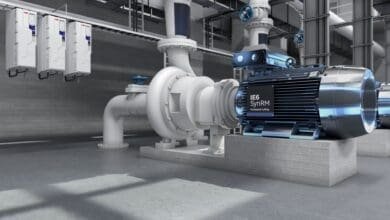

Choosing pumping equipment on purchase price alone can prove a costly mistake. With energy consumption accounting for the largest share of a pump’s lifetime cost, whole-life and whole-system performance is becoming a far more important consideration than upfront capital expenditure. Wayne Rose, Chief Executive of the British Pump Manufacturers Association (BPMA), explains why lifecycle thinking is essential and how the Association’s Certified Pump Systems Auditor (CPSA) training helps engineers identify opportunities to reduce long-term operating costs.
Improving energy efficiency has become one of the defining challenges facing today’s industrial, commercial, and manufacturing sectors. Rising energy costs, increasingly demanding environmental legislation and corporate sustainability commitments are driving organisations to examine every aspect of their operations in search of greater efficiency. Against this backdrop, regular energy audits have become an essential management tool, helping businesses understand where energy is being consumed and, more importantly, where meaningful savings can be achieved.
Among the many systems found within industrial facilities, pumping systems frequently represent one of the largest users of electrical energy. Whether moving water, chemicals, wastewater or process fluids, pumps often operate continuously, sometimes around the clock, making even relatively small improvements in efficiency capable of delivering significant financial returns.

The British Pump Manufacturers Association (BPMA) believes that many organisations are overlooking one of the greatest opportunities for reducing operating costs simply because purchasing decisions remain too heavily focused on initial acquisition costs rather than long-term operational performance.
Energy audits provide the evidence needed to challenge this approach. By analysing how equipment performs under real operating conditions, engineers can identify oversized pumps, inefficient system layouts, inappropriate control strategies, and equipment operating outside its optimum performance range. These inefficiencies often remain hidden for years, quietly increasing electricity consumption and maintenance costs while reducing overall system reliability.
Importantly, improving efficiency is rarely about replacing a single component. The greatest gains are achieved by adopting a system-wide approach that considers the interaction between pumps, motors, drives, valves, controls, pipelines, and the operational demands placed upon them. Optimising the complete pumping system invariably delivers greater savings than concentrating on individual items of equipment in isolation.
Central to this philosophy are the principles of total cost of ownership (TCO) and whole life costing (WLC). While procurement decisions have traditionally focused on purchase price, experienced engineers recognise that the capital cost of a pump often represents only a small fraction of the money that will ultimately be spent throughout its operational life.
Electricity consumption typically accounts for the overwhelming majority of a pump’s lifetime cost, often exceeding the original purchase price many times over. Maintenance, servicing, downtime, and eventual replacement all contribute further to the overall financial commitment. Judging equipment solely on the lowest purchase price therefore presents a distorted picture of its true value.
One of the principal barriers to adopting lifecycle thinking remains the organisational separation of capital and operational expenditure budgets. Procurement teams are frequently measured against their ability to minimise capital spending, while energy costs are managed elsewhere within the organisation. As a consequence, the individuals selecting new equipment are not always directly accountable for the long-term operating costs that follow.
This disconnect can unintentionally encourage purchasing decisions that appear economical at the outset but ultimately prove significantly more expensive over the life of the equipment. A lower-cost pump with inferior efficiency may save a relatively modest amount on day one, only to incur many thousands of pounds in additional electricity costs over the following decade.
Conversely, selecting a premium, energy-efficient pumping solution often requires only a comparatively small increase in initial investment. Once reduced electricity consumption is factored into the equation, the additional capital outlay can frequently be recovered within a surprisingly short period. From that point onwards, the organisation benefits from sustained reductions in operating costs year after year.
This more balanced approach to procurement should no longer be viewed as best practice for only the largest organisations. Businesses of every size stand to benefit from considering lifecycle costs when specifying new pumping equipment. Whether upgrading a single pump or designing an entirely new process installation, the principles remain the same: invest wisely at the outset and reap financial rewards throughout the asset’s life.
The benefits extend well beyond economics. Lower energy consumption directly reduces carbon emissions, helping organisations meet increasingly ambitious environmental objectives while supporting broader corporate sustainability strategies. In many cases, investments that improve pump efficiency simultaneously strengthen competitiveness, improve resilience against future energy price fluctuations, and demonstrate a genuine commitment to responsible environmental stewardship.
For these reasons, the BPMA continues to encourage engineers, consultants, specifiers, and end users to adopt a holistic, system-wide approach when considering new pumping equipment. The focus should shift from simply purchasing a pump to designing, installing, and operating an optimised pumping system that delivers maximum efficiency throughout its operational life.
Supporting this objective is the BPMA’s Certified Pump Systems Auditor (CPSA) training course. Developed specifically to equip engineers with the knowledge required to assess pumping systems comprehensively, the programme enables delegates to understand how systems consume energy, identify operational inefficiencies, evaluate improvement opportunities, and make evidence-based recommendations that deliver measurable energy savings.
As organisations continue their journey towards greater efficiency and lower carbon emissions, the ability to make informed purchasing decisions based on lifecycle performance rather than purchase price alone will become increasingly important. By combining regular energy audits with sound engineering principles and a whole-system perspective, businesses can unlock substantial financial savings while making a lasting contribution to their sustainability ambitions.
Click here to find out more about the Certified Pump Systems Auditor (CPSA) training programme and discover how the BPMA can help your organisation improve pumping system efficiency, reduce energy consumption and lower whole-life operating costs