Hidden energy savings in plain sight
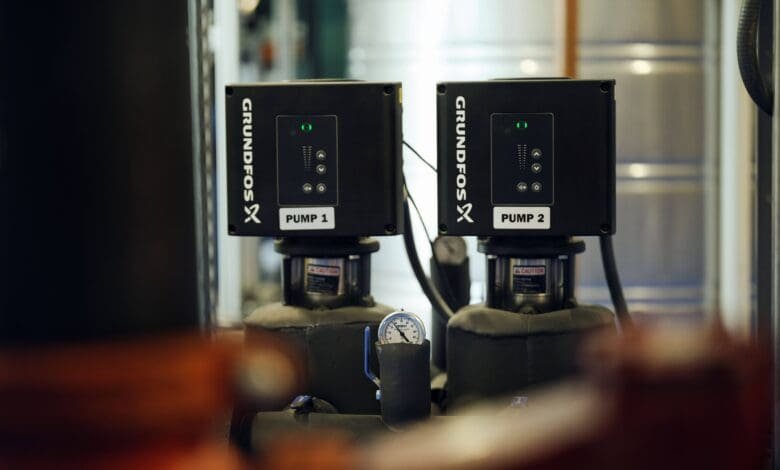
As the UK works toward its 2050 net-zero targets, Grundfos is highlighting one of the most overlooked opportunities for reducing carbon emissions in commercial buildings: pump and control system optimisation.
Often hidden away in plant rooms, pumps and their control system present a major opportunity for both environmental and operational gains. Across the UK, commercial buildings account for around one-quarter of built-environment carbon emissions, while pumps represent roughly 10% of global electricity consumption. Despite the significant potential for reduction, pumps and pumping systems receive far too little attention in the transition to net-zero, with the focus often placed on upfront cost rather than the long-term impact.
“You cannot achieve a truly efficient, low-carbon building without addressing the systems that run behind the scenes. Pumps play a far greater role in lifetime energy use than many realise, and optimising them is one of the fastest, most cost-effective ways to reduce emissions across the UK’s commercial buildings,” said Glynn Williams, Senior Area Sales Director for UK & Ireland, Grundfos Commercial Building Services.

While new construction often dominates the sustainability conversation, more than 80% of the UK’s commercial buildings that will be in use by 2050 have already been built, and many rely on outdated pump systems that consume far more energy than necessary.
A multi-year Grundfos project at a major government office in central London shows what can be achieved through system modernisation and targeted energy optimisation.
In the historic London building, Grundfos has been working to replace 92 outdated belt-driven pump units with modern, high-efficiency solutions since 2021. To date, 64 pumps have been upgraded, delivering 1.8MWh of annual energy savings and reducing carbon emissions by 745 tonnes of CO₂ every year.
The greatest energy-saving potential lies not only in the pump itself, but in how the entire system is designed and controlled.
“The real opportunity lies in understanding how a building’s systems behave, not just in the components themselves. Our intelligent water solutions allow performance to be precisely matched to each building’s needs, delivering comfort, reliability and compliance with the UK’s increasingly stringent energy-efficiency standards, while significantly reducing carbon emissions,” added Glynn.
The London project has replaced outdated equipment with high-efficiency solutions, including Grundfos TP and NB ranges. The building is now benefiting from lower energy consumption, reduced operating costs, improved system reliability and a more stable heating and cooling environment. Now in its fifth phase, the project is expected to deliver further savings as the remaining pumps are upgraded.
Grundfos believes that achieving lower-carbon buildings on a larger scale will require the industry to pay closer attention to pump and system optimisation. The technologies needed to deliver significant energy and carbon reductions already exist – but they must be deployed more widely.
“If the UK is serious about delivering low-carbon buildings at scale, the industry must take a more strategic approach. That means challenging familiar ways of working and examining the entire energy system – including the areas that are often overlooked. Some of the most substantial and achievable carbon savings are hidden in the plant room, and now is the time to unlock them,” concludes Glynn.
Find out more at Grundfos.com/uk