
Making the switch from air to electric diaphragm pumps
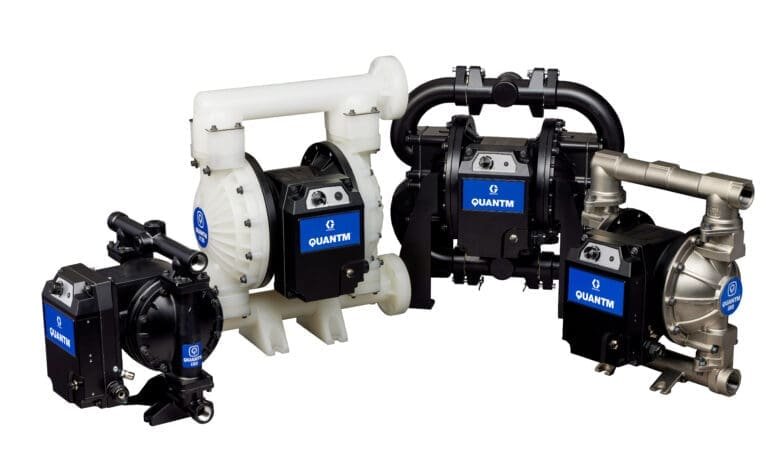
A national cardboard manufacturer has seen significant energy cost savings from replacing Air-operated double diaphragm pumps with electrically operated double diaphragm pumps supplied by CDR Pumps, as Flow discovered.
Air-operated double diaphragm (AODD) pumps are well established, offering the ability to handle fluids with a wide range of viscosities and temperatures, as well as solids and abrasive materials.
The drawback with AODD pumps, however, is the compressed air needed to power them. Reported figures suggest that AODD pumps typically operate at an efficiency of between 10 and 15%, with the production of compressed air contributing significantly to their operating costs.

Electrically operated double diaphragm (EODD) pumps offer an alternative, retaining many of the characteristics associated with diaphragm pump technology while replacing the compressed-air supply with an electric drive.
Like an AODD, an EODD is a positive displacement pump in which a flexible diaphragm moves backwards and forwards to create the suction and discharge cycle that transfers liquid through the pump. Instead of compressed air providing the motive force, however, an electric motor and drive mechanism operate the diaphragm.
The QUANTM range developed by Graco and available in the UK from CDR Pumps, applies this approach while retaining characteristics associated with AODD pumps, including self-priming, the ability to handle solids and abrasive materials and the ability to stall under pressure. Integrated controls are also provided for flow and pressure at the pump, as well as remote operation.
Putting the technology to the test
The opportunity to compare the two technologies arose at a national cardboard packaging manufacturer using AODD pumps for the continuous production of starch-based corrugating adhesives across several sites.
The company wanted to reduce its energy use and associated costs, while also addressing recurring maintenance issues involving exhaust icing and air valve wear.
A challenge, however, was that the manufacturer had limited visibility into the actual operating cost of its pumps because compressed air was produced only in the quantities required to run them.
CDR began with a controlled trial at one of the manufacturer’s sites. CDR replaced a single AODD pump with a QUANTM electric diaphragm pump on a like-for-like basis and compared the performance of the two technologies.
The difference was substantial.
Annual energy consumption for the AODD was calculated at 47,813kWh, compared with 5,880kWh for the QUANTM unit. Based on an energy price of £0.21/kWh, that equated to annual energy costs of £10,041 and £1,235, respectively.
The trial therefore indicated an 88% reduction in energy use and an annual saving of approximately £8,800 from the single pump.
CDR says the calculation was deliberately conservative. The figure used for the AODD did not include potential compressed-air leakage or inefficiencies associated with the compressor itself.
From trial to wider installation
An important consideration was whether changing drive technology would require substantial modifications to the existing installations. According to CDR, the QUANTM pumps have a similar footprint to an equivalent AODD, allowing the replacements to be made with minimal modification. So, following the initial results, seven AODD pumps were replaced with equivalent-sized QUANTM units.
Monitoring also continued following installation, measuring real-time kWh consumption at the supply point. CDR reports that the subsequent installations produced average energy savings of 7.5kWh per pump.
The project was then expanded considerably, with CDR ultimately supporting the installation of 96 QUANTM pumps across 11 UK manufacturing sites. According to the company’s figures, the installations saved the manufacturer £980,000 in energy costs during the first year.
Looking beyond energy
Energy consumption provided the original justification for comparing the technologies, but the manufacturer also reported operational changes following the switch.
Removing compressed air eliminated the exhaust icing problem and reduced noise levels. And CDR also reports reduced maintenance requirements resulting from fewer moving parts, along with improved reliability and reduced downtime.
Click here for more information