What goes into producing a bespoke pump?
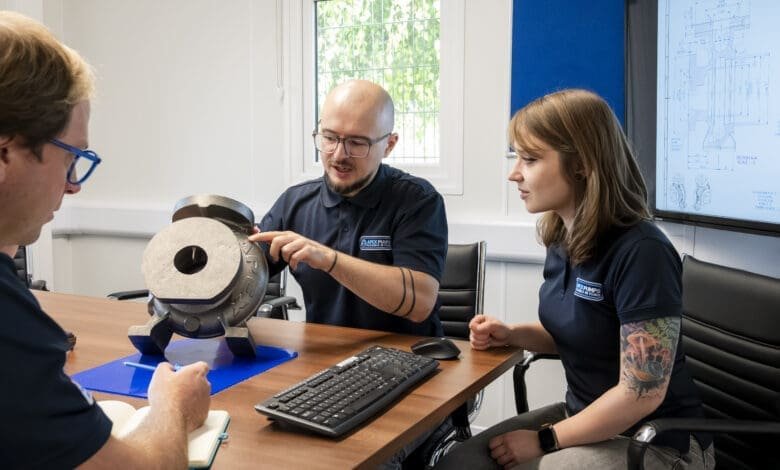
At first glance, specifying a pump can appear relatively straightforward. A liquid needs to move from one point to another, at a certain flow and pressure, and the assumption is often that a standard off-the-shelf unit will do the job. In reality, the process can be considerably more involved, as Andrew Simpson from UK pump manufacturer, Apex Pumps, explains.
Across industries ranging from food and beverage production to chemical processing, mining and utilities, there are many situations where standard pump designs are either unsuitable or unable to deliver the performance, reliability or practicality required. In these cases, the development of a bespoke solution can help resolve challenges that may not initially be obvious to the end user.
For Bristol-based British manufacturer Apex Pumps, creating bespoke pump solutions is about far more than simply altering dimensions or changing a material specification. It involves understanding the application in detail, balancing hydraulic performance with manufacturing practicality, and applying engineering experience across the entire process, from specification and design through to manufacture, testing and commissioning support.

When standard pumps are not enough
Bespoke can mean different things depending on the application.
In some cases, the requirement may involve adapting an existing pump platform through different materials, sealing arrangements, motor configurations or mounting arrangements. In others, the application may sit completely outside the operating envelope of standard product ranges and require a new hydraulic design altogether.
According to Apex Pumps, many bespoke projects begin because site constraints or process requirements make standard equipment impractical. While dimensional standards such as EN733, ISO 2858 and API610 provide valuable interchangeability across the industry, they cannot account for every real-world situation.
A brewery, for example, may need to maximise available head height to increase production capacity, while a food processing plant may require a system capable of fully draining without product pooling. Legacy systems can present further complications, particularly where older pumps do not conform to modern dimensional standards and replacing them with standard alternatives would require expensive changes to pipework, civils or infrastructure.
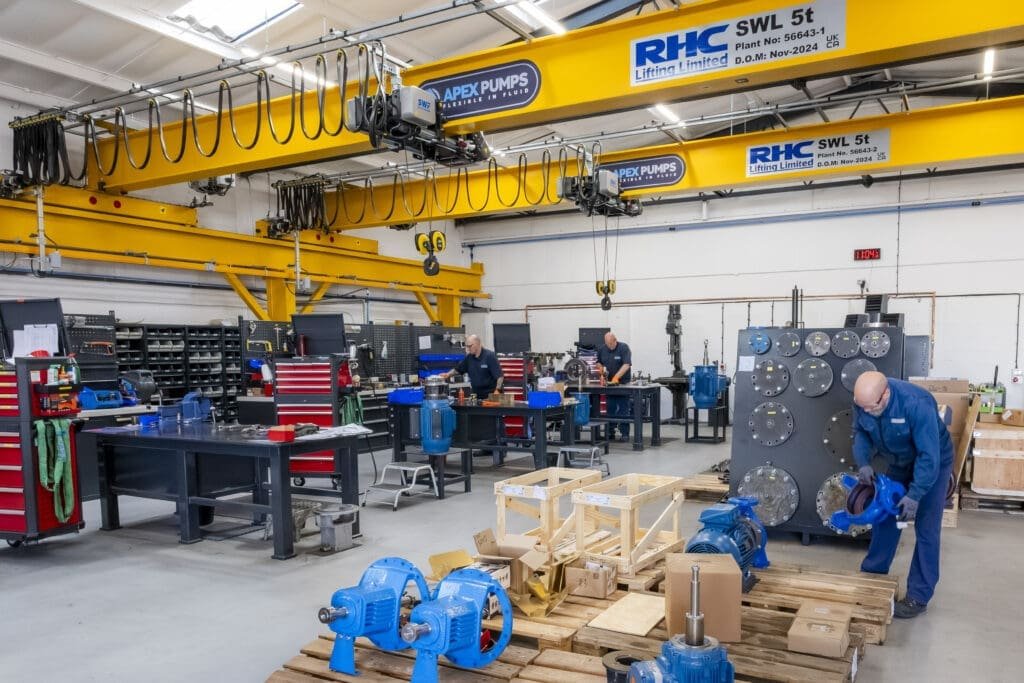
Fluid characteristics also play a major role. Abrasive products, chemically aggressive liquids or fluids containing solids may require upgraded materials, specialist sealing arrangements or alternative hydraulic configurations that standard pumps are not designed to accommodate.
Environmental conditions can also drive customisation. Hazardous areas, washdown environments or customer preferences around controls and electronics can all influence the final specification. Even relatively simple details such as colour coding can become important where pumps need to be visually identified by system or fluid type.
In many industries, standardisation across a site is equally important. End users may request commonality of mechanical seals or other wearing components across multiple pump types and manufacturers to simplify maintenance and spare part management.
Defining the specification
One of the biggest challenges in bespoke pump development is gathering the right information at the beginning of the process.
Requests can range from minimal detail, such as “I need a new pump”, through to highly detailed technical specifications referencing multiple standards and operating conditions. Both situations require careful clarification to ensure the correct solution is selected.
At the core of the hydraulic selection process are five key areas:
- Flow rate
- Total dynamic head
- Fluid properties
- Net Positive Suction Head (NPSH)
- Operating conditions and environment
However, Apex stresses that successful pump specification goes well beyond hydraulic performance alone.
Mechanical and operational considerations such as available footprint, pipework interfaces, system pressures, temperature limits and utility availability all influence the final design. Small changes in fluid composition, for example, can significantly alter specific gravity and therefore impact pump sizing and performance.
Understanding the wider system is equally important. Poor system design or excessive safety margins added at multiple stages can create operational problems that ultimately affect reliability and efficiency.
This is where close collaboration becomes valuable. Apex often works alongside customers and specialist partners to refine specifications, fill information gaps and ensure the selected solution genuinely suits the application rather than simply matching headline duty points on paper.
Turning requirements into a practical design
Once the application requirements are understood, the project moves into the design phase.
Where an application can be addressed using existing product platforms, the process can remain relatively streamlined. More complex engineered solutions, however, typically involve collaboration between sales, engineering and manufacturing teams to review the finer details of the project before development begins.
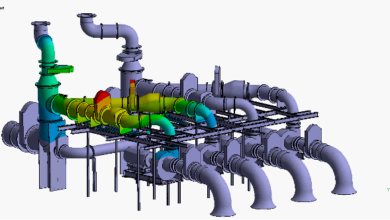
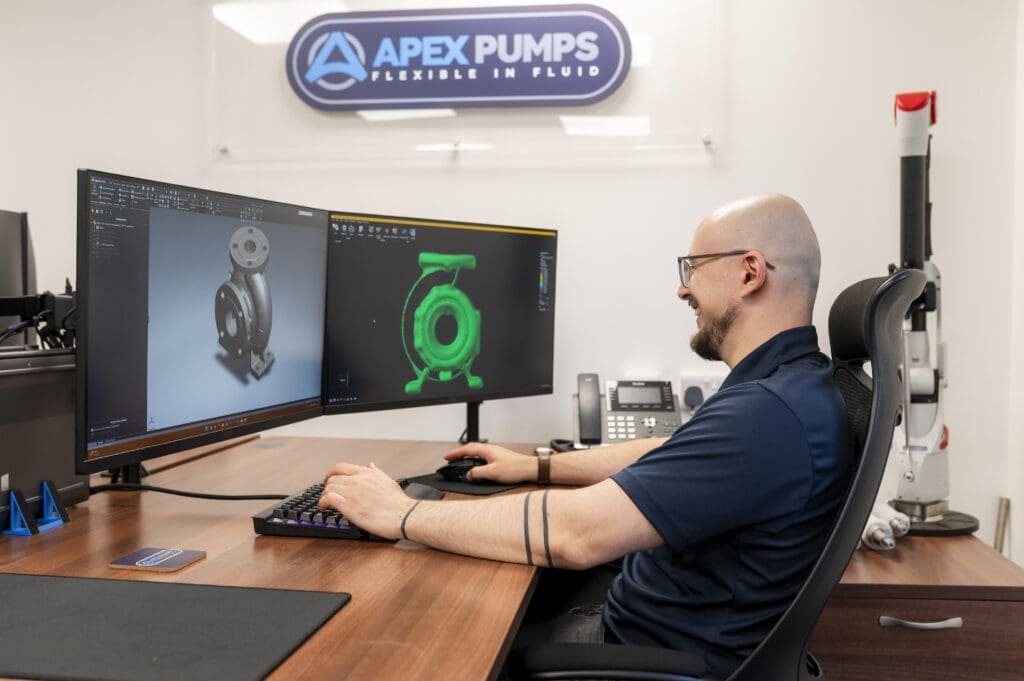
Modern bespoke pump development relies heavily on digital engineering tools. Apex uses detailed 3D CAD modelling throughout the process, allowing complete assemblies to be developed digitally before manufacture begins.
If a new hydraulic design is required, more advanced analysis and validation techniques may also be used, including Computational Fluid Dynamics (CFD) modelling and testing.
Importantly, the focus is not solely on achieving hydraulic performance.
The design must also account for manufacturability, maintainability and practical installation considerations. Small details can make a significant difference in the field. Apex points to examples where casting designs have been subtly altered simply to improve spanner access during assembly or maintenance. While such changes may appear minor, they can significantly improve accessibility, reduce installation frustration and simplify future servicing work.
This kind of thinking reflects a broader engineering philosophy that extends beyond the pump itself and into the realities of how equipment will actually be manufactured, installed and maintained.
Designing for manufacture
One of the less visible aspects of bespoke pump development is the amount of engineering work dedicated to ensuring components can be manufactured efficiently and reliably.
At Apex, this forms part of a wider “Design for X” approach, which encourages collaboration between engineering and every stage of the manufacturing process.
Casting design, for example, is developed alongside foundry partners to reduce the likelihood of defects and improve manufacturability. Fabricated components are designed in ways that account for welding setup, material tolerances and variation introduced during fabrication processes.
Machining considerations are equally important. Components must not only meet dimensional requirements, but also be designed so they can be repeatably and accurately held during machining operations.
Assembly considerations are factored in at an early stage too. Engineers may adjust casting geometry or surrounding features simply to improve tool access, ease assembly or reduce the potential for installation difficulties later in the product’s life.
According to Apex, much of a product’s eventual cost is effectively determined at the design stage. Once a design is finalised, opportunities to significantly reduce production costs become limited. As a result, manufacturing efficiency, processing costs and assembly practicality are all evaluated alongside material and hydraulic performance during development.
More than simply supplying a pump
While the finished product may ultimately be judged on reliability and performance in service, the process behind a bespoke pump solution is often far more collaborative and engineering-intensive than many end-users realise.
For companies such as Apex Pumps, the value lies not only in producing the final pump, but in helping customers navigate specification challenges, avoid costly design compromises and develop solutions tailored to the realities of their application.
In an increasingly standardised global marketplace, that combination of engineering flexibility, manufacturing expertise and close customer collaboration remains one of the defining advantages offered by specialist UK manufacturers.
Click here for more information