Report highlights the benefits of a 0.2% motor efficiency gain
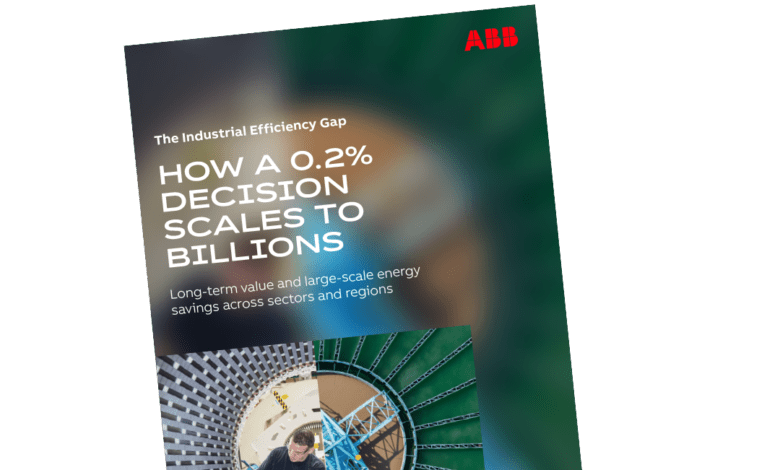
ABB’s recent report ‘The Industrial Efficiency Gap’ shows how high-efficiency industrial motors and generators can unlock one of the largest untapped opportunities to save energy, cut costs and reduce emissions in global industry.
Examining a decade of data from ABB’s Västerås manufacturing facility in Sweden, of more than 1,000 large synchronous motors and generators delivered worldwide between 2015 and 2025, the report finds that a significant efficiency gap persists between what is routinely specified and what is achievable through ABB’s Top Industrial Efficiency (TIE) approach, which focuses on specifying the highest efficiency motor or generator using proven commercially available technology.
Applied across the global installed base of similar equipment, this 0.2% gap is costing operators between $9.5 to $12 billion in unnecessary electricity costs and generating 60 to 75 million tons of avoidable CO₂ over a 25-year asset life – despite typical payback periods of a few months to up to three years.

“Industry has spent decades optimising what happens inside a plant. Yet large motors and generators have rarely been part of that conversation,” said David Bjerhag, Global Business Line Manager, High Speed Synchronous, ABB. “The gap between a standard machine and a TIE-optimised one is not technological. It is a specification gap. The companies closing it fastest are the ones that are aligned around total cost of ownership.”
The report highlights adoption trends by country and industry segment, showing how uptake varies across regions and applications. On average, the TIE option delivers 98.7 to 98.8% efficiency compared with a standard 98.5% – a 0.2 percentage‑point improvement that serves as a baseline, with gains of 1 to 1.5 percentage points achievable in some applications, particularly induction-based systems.
Applying that TIE 0.2 percentage point efficiency improvement across the global installed base of industrial motors and generators would save 4 to 6 TWh per year. Over a 25-year motor lifetime, that rises to 100 to 150TWh of electricity saved.
Click here to access the report